


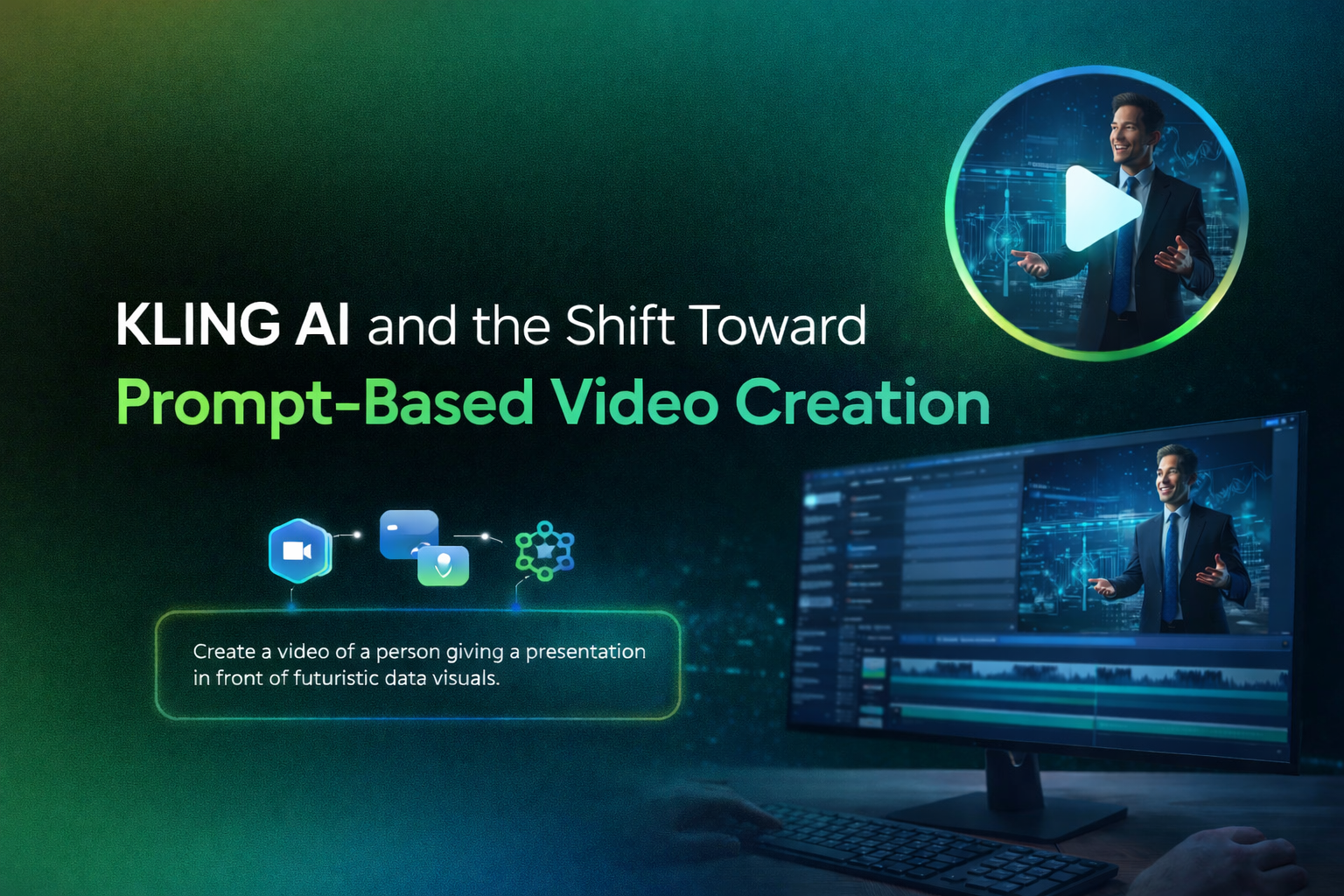
The world of video production is undergoing a rapid transformation. Traditionally, creating a polished video required a mix of filming, editing, motion design, and narrative planning often meaning long hours and expensive tools. But in the age of artificial intelligence, creators are finding new ways to bring ideas to life without needing years of technical experience. One of the most exciting developments in this evolution is prompt-based video creation, where AI tools interpret simple text descriptions and convert them into finished video content.
Among the pioneers in this emerging space is Kling AI, a tool designed to democratize video creation by allowing users to generate dynamic visual stories directly from textual prompts. As AI continues to reshape digital content workflows, Kling AI stands out as a powerful example of how automation and creativity can merge to redefine what’s possible in video production.
In this article, we explore how Kling AI represents this shift and how tools like invideo are integrating these capabilities to make AI video creation accessible to a broader audience.
What Is Prompt-Based Video Creation?
Prompt-based video creation describes a workflow where users input a text prompt a description of what they want to see and the AI generates a video that aligns with that description. Instead of manually editing scenes, arranging timelines, and handling complex software, the creator focuses on the idea. The AI takes care of visual synthesis, motion, pacing, and structure.
This approach significantly lowers the barrier to entry for video production. Content creators, marketers, educators, and business owners can now focus on their message rather than technical editing.
For example, instead of shooting and editing a product demo, you might write:
“A sleek and modern product reveal showing the device rotating on a reflective surface with upbeat music and smooth transitions.”
An AI video generator interprets this prompt, breaks it down into visual cues, and produces a corresponding video. That’s the power of prompt-based workflows.
Kling AI: What It Brings to the Table
Kling AI is one of the tools leading this shift. It allows creators to transform simple prompts into engaging video content without needing professional editing experience.
Key Strengths of Kling AI
- Text-to-Video Interpretation: Users describe what they want, and Kling AI generates visuals that match.
- Automated Scene Composition: The AI handles transitions, motion, and scene flow without manual editing.
- Creative Flexibility: Simple prompts can produce a range of styles, from narrative sequences to promotional clips.
- Speed: What once took hours in traditional editing tools can now be generated in minutes with AI assistance.
The result is a workflow that feels more like directing than editing. Instead of technical commands, you use language the same way you’d describe a video idea to a collaborator.
The Rise of AI in Content Creation
Prompt-based video tools like Kling AI are part of a broader trend where artificial intelligence augments creative work. Similar to how text-to-image models revolutionized visual creation, AI video tools enable creators to bypass technical hurdles.
This shift has major implications:
- Faster Turnaround Times
AI dramatically cuts production timelines. A video that might take a day or more with traditional editing can be generated in minutes. - More Content, Less Cost
Smaller teams and solo creators can produce professional video without expensive equipment or hiring editors. - Experimentation and Iteration
Since generating variations is fast and inexpensive, creators can A/B test different approaches and refine messaging quickly. - Democratized Creativity
Anyone with a story or message can now make high-quality video — even without specialized training.
These advantages make AI video tools especially attractive for social media marketing, branded content, product showcases, explainer videos, and educational materials.
Invideo’s Integration of Kling AI
Recognizing the potential of prompt-based video creation, invideo has integrated Kling AI into its platform. This means users no longer need separate accounts or workflows they can harness advanced AI video generation directly within invideo’s creative environment.
With invideo’s integration of Kling AI video generation, creators can describe their video ideas with natural language prompts and have the platform generate corresponding visuals automatically. Invideo then allows further customization including text overlays, transitions, soundtracks, and branding all without leaving the editor.
This seamless integration brings powerful AI video creation together with invideo’s intuitive workflow, making it easier than ever for creators of all experience levels to produce professional content.
Rather than thinking of AI generation as an isolated step, invideo treats it as part of a complete video creation process from concept to final export.
How Kling AI Enhances Productivity
AI video generation tools are not just about making content faster; they also expand what creators can experiment with. Here’s how Kling AI improves productivity across various use cases.
1. Content Marketing
Marketers can create multiple versions of promotional clips, each tailored to different platforms or audience segments, in a fraction of the time it once took.
2. Social Media Engagement
Short, engaging videos are key to modern social platforms. With prompt-based creation, teams can produce frequent updates without overwhelming production loads.
3. Training and Education
Educators can generate instructional videos based on lesson descriptions, helping bring abstract concepts to life visually without needing advanced video skills.
4. Rapid Prototyping
Creative teams can quickly test out video ideas during brainstorming sessions, allowing visual exploration long before final production.
These advantages make AI video generation especially with tools like Kling AI more than just a convenience. It becomes a strategic asset for storytelling.
Best Practices for Prompt-Based Video Creation
While AI video tools streamline production, the quality of output depends heavily on how prompts are written. Below are some tips to maximize results:
Be Descriptive but Concise
Include key elements like setting, mood, pacing, and visual style. Avoid vague descriptions.
Use Actionable Language
Phrases like “show a transition,” “zoom in on,” or “fade into” help the AI interpret movement and flow.
Specify Tone and Style
Mention whether you want something cinematic, upbeat, emotional, or informational. This helps the AI choose the right visual cues.
Iterate and Refine
Don’t expect the perfect output on the first try. Adjust your wording based on what the AI interprets to lead to closer results.
Combine with Editing Tools
Use generated footage as a starting point and refine further with editors like invideo to polish transitions, add captions, or brand elements.
These practices help align AI output more closely with creative intent, producing videos that feel purposeful rather than generic.
Challenges and Considerations
Like any transformative technology, AI video generation comes with limitations. Prompts may be interpreted differently than expected, leading to outputs that need refinement. Some nuances such as complex narrative beats or highly specific visual identities may still require human editing. Additionally, ethical considerations around representation and usage rights should be kept in mind when generating content.
However, with thoughtful prompt design and iterative workflows, these tools offer significant advantages over purely manual methods.
What the Future Holds
AI video creation is still rapidly evolving, and tools like Kling AI offer just a glimpse of what’s possible. As models become more sophisticated, we can expect:
Multilingual prompt support — allowing creators to generate videos in multiple languages.
Emotion-aware generation — where AI can better interpret the emotional tone of prompts.
Interactive video outputs — enabling viewers to engage with content dynamically.
Deeper editing insights — where AI suggests improvements or narrative adjustments.
These advancements promise to redefine content creation workflows even further, making high-quality video accessible to anyone.
Conclusion
Kling AI represents a major step forward in the age of prompt-based video creation. By allowing creators to produce visual stories using natural language prompts, it removes many of the technical barriers that once made video production challenging.
With Kling AI now integrated into platforms like invideo where Kling AI video generation lives alongside editing tools and customization features the entire process from idea to finished video is more seamless and accessible than ever before.
Whether you’re a marketer, storyteller, educator, or social media creator, prompt-based video creation is not just a trend it’s a powerful tool that expands creative possibilities, boosts productivity, and opens up new avenues for engagement. As AI continues to advance, the tools that help us express ideas visually will become even smarter, more intuitive, and more aligned with the way humans think and communicate.
